
Planning
The 15-Minute Sunday Family Reset
A short weekly family check-in for calendars, meals, responsibilities and the small details that can catch everyone off guard on Monday.
Published Oct 1, 2026 6 min read FamilyGoal team

Planning
A short weekly family check-in for calendars, meals, responsibilities and the small details that can catch everyone off guard on Monday.
Less chasing, fewer forgotten details, and a clearer sense of what comes next for everyone in the family.
Available today on the web and the App Store.
Coming to Android — pre-registration is open.


Android release expected October 1, 2026
Sunday evening can feel calm until someone asks who is doing Tuesday's pickup. Then a school message needs an answer, the fridge offers no clue about dinner, and a bag still needs packing. None of these is a crisis. Together, they can make Monday feel as though it arrived early.
The Sunday Family Reset gives everyone one short chance to look at the same week. Set aside 15 minutes to check what is coming, decide the few things that need an owner, and leave the rest alone. You can use a notebook, a calendar on the fridge, or a shared app. The point is that the plan no longer has to live in one person's memory.
Pick a time when the people who need to make decisions can join. After a meal may work; so might Saturday afternoon if Sundays are crowded. The name comes from Sunday, but any day with a quiet moment works. One adult can prepare by opening school messages and the calendar, but the decisions should not all fall back to that person.
The American Academy of Pediatrics' guidance on family meetings suggests a regular, pleasant time, a chance for each person to speak, and generally wrapping up within 20–30 minutes. The 15-minute reset borrows that spirit for a shorter planning check-in. Keep the tone kind, let family members mention what affects them, and write down the decisions you make.
Use the 15 minutes as a boundary. If a bigger issue appears, name who will discuss it and when. A disagreement about money or a child's worries deserve more than the final two minutes of a calendar review. When you finish, everyone should know what is coming and who is handling the few things that matter most.
Put one calendar and one place for next actions in view. A timer can help if your family tends to spend the whole evening planning. Treat the times below as prompts. Spend longer on the part that matters this week and skip anything that does not.
Look at the next seven days. Put school events, appointments, activities and other commitments with a real time on the calendar. For each one, ask who needs to be there, how they will get there, and whether someone must bring or send something. “Dentist, Thursday at four” is less useful than “Dentist, Thursday at four; Alex does pickup and brings the forms.”
Check changes that arrived in messages during the week. If a pickup or appointment is uncertain, mark the question and give someone the job of confirming it. Do not fill the calendar with every possible task. It should show the commitments that shape the family's time.
Find the evenings when dinner will be rushed or someone will be out. Choose a workable meal for those nights. The other days can stay flexible. Check what is already in the kitchen before adding ingredients to a shopping list.
A few decisions usually cover it. You might settle Tuesday's late meal, decide who cooks on Thursday, and notice that breakfast supplies are running low. If a child wants to choose one meal, give them a real choice within what the household can manage.
Look at the tasks and recurring jobs that matter this week. Who will return the library books? Who checks the sports gear? Which bill or form needs attention before Friday? Give each necessary action a clear owner and, when it matters, a day. “Sort school stuff” leaves too much guessing; “Put the signed form in the bag on Wednesday evening” gives someone a next step.
Prepare only what the week requires. A school bag can wait until the relevant night; the useful Sunday decision is who will check it. Children can help identify what their activities require, while an adult keeps responsibility for anything the child is not ready to manage. Try to share the noticing as well as the doing, so one person is not left monitoring every assignment.
Scan for an unusual expense, an errand that affects another plan, or a household detail someone else will need. Write each one down as a specific next step. Then ask what the family would like to look forward to: a walk, a movie night, a visit, or a quiet hour together. It does not need to cost money or occupy a whole day.
End by reading back the few decisions that changed: the pickup, the meal, the task owner, the thing everyone hopes to enjoy. Each person should know where to check the plan later. There is no need to recite everything already on the calendar.
A preschooler can choose between two meal ideas or help remember what belongs in an activity bag. A school-age child may be ready to point out a deadline and take responsibility for one preparation task. A teenager may be able to check transport or enter an event with support. These are examples, not milestones. Choose a part that fits the child in front of you, then build from there.
Keep the conversation on the week ahead, and let last week's misses go. The American Academy of Pediatrics also advises families to keep routines predictable without making them rigid. Children can have a voice in the plan even when adults make the final decision about timing, safety and money.
If someone cannot join, tell them what changed and give them a way to correct a missing detail. A shared plan is only useful if the people affected can see it.
Some Sundays leave no room for a full reset. Ask three questions instead: What has a fixed time this week? What must someone prepare or confirm? Who is doing each of those things? Write down the answers where the family can find them. Meals and errands can wait until the next available moment unless they affect Monday.
Do not make up the missed minutes on Sunday night. A short check-in can prevent the most obvious surprises while leaving the family with its evening. If weekends never work, move the check-in to a day that does. What matters is coming back to the shared plan each week, whenever that happens.
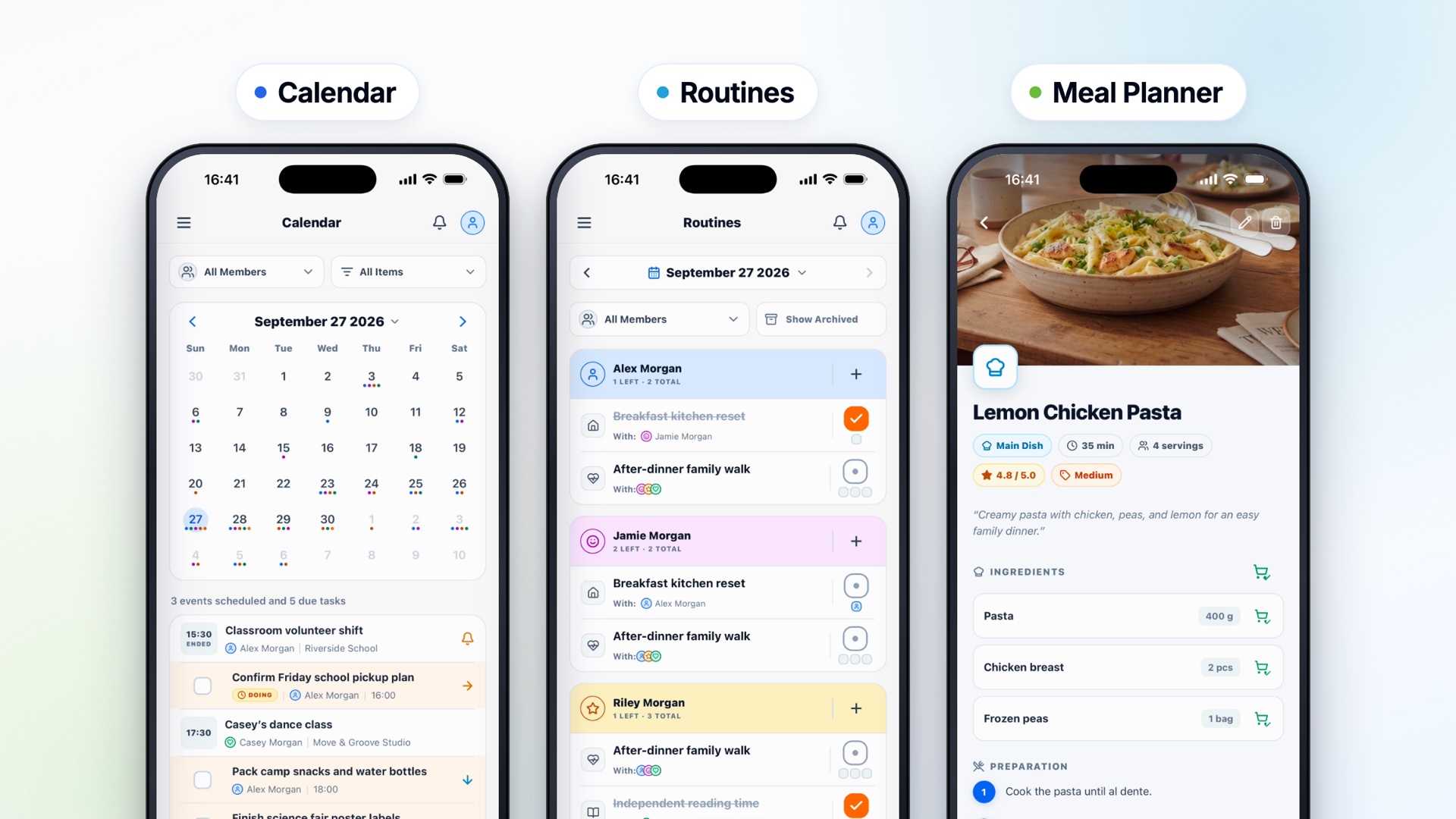
The reset becomes easier to repeat when the answers stay visible after everyone leaves the table. FamilyGoal's shared family organizer can hold the timed commitments in the calendar, the one-off follow-ups as assigned tasks, repeatable work as routines, and the meal and shopping decisions alongside them. Family members see and act on the parts their access allows. After the check-in, they can open the plan instead of asking one person to remember it. Your family still decides what matters and who owns it.
Try the reset this Sunday, or on the day that fits your household. Start with next week's fixed points, settle the handoffs that tend to cause questions, and stop when everyone knows where to look. After a few weeks, keep the questions that help and drop the ones that do not.